
Products to Enhance Your Four-Step Lawn Care Program
While Dambly’s Four-Step Lawn Care Program provides the seasonal backbone for a healthy, vibrant lawn, certain conditions call for targeted solutions. That’s where our supporting lawn care products come in.
From spring seeding and soil conditioning to pest, weed, and disease control, these complementary products help you fine-tune your lawn care routine based on what your lawn needs right now. Whether you’re repairing thin areas, correcting soil issues, managing grubs or moss, or boosting overall turf health, the right add-on at the right time can make a noticeable difference.
Our team can help you choose the best options—such as grub control, weed treatments, organic fertilizers, lime, gypsum, or fungus control—to work alongside the 4-Step Program for stronger roots, thicker grass, and better year-round performance.
Keep scrolling to explore our recommended products to customize your lawn care plan and get the most out of every season.

Alternate Step One Product If Seeding In Spring
Standard Step One crabgrass preventers cannot be used when seeding in the spring.
If you plan to seed in the spring, use a starter fertilizer or the Scotts Step One for Seeding instead. These products support new grass growth without interfering with germination. Apply starter products once soil temperatures reach 60°F, which typically occurs in early to mid-April.
Why This Matters
Crabgrass preventers stop seeds from sprouting, including grass seed. Using the correct starter product ensures new grass can germinate, establish strong roots, and fill in properly without being blocked by weed control.
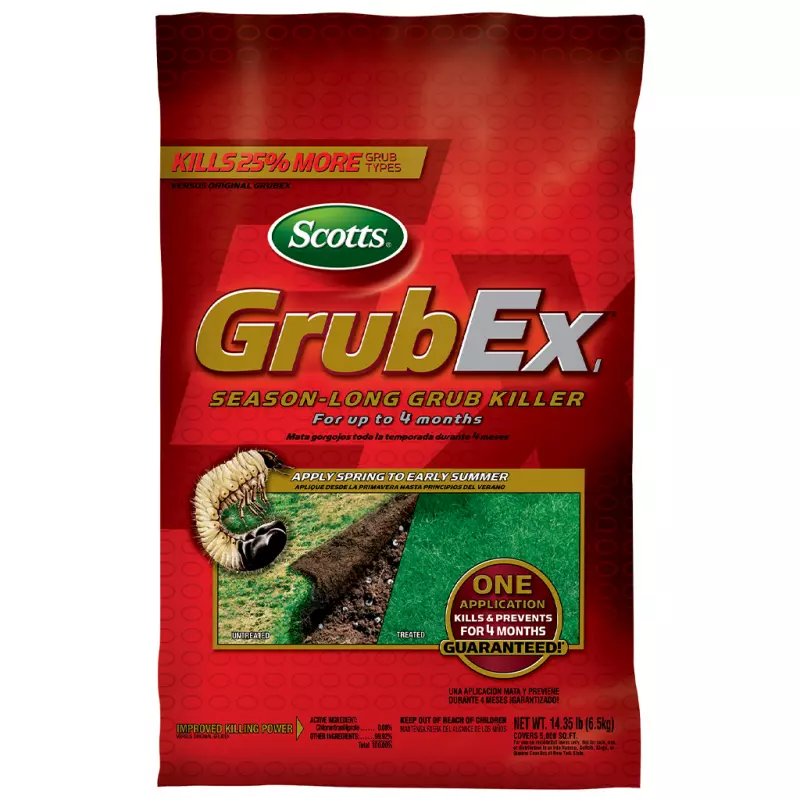

Grub Control
Grubs cause damage below the surface long before you see it above ground. Treating at the right times disrupts the insect life cycle, prevents root damage, and helps protect your lawn from thinning, browning, and wildlife digging later in the season.
Scotts GrubEx and BioAdvanced Complete Insect Killer should be applied in the second week of April for early-season protection. At this stage, treatments help interrupt the grub life cycle before serious turf damage occurs.
Grubs mature into Japanese beetles in June, which lay eggs in late July. Those eggs hatch into new grubs around the second week of August, so a second application is recommended at that time to target grubs when they are most vulnerable.
Application Notes
- BioAdvanced Complete Insect Killer targets surface-dwelling insects only
- Although the bag covers up to 12,500 sq. ft., it must be applied at a higher rate to be effective
- Use the entire bag on 5,000–6,000 sq. ft. for proper control
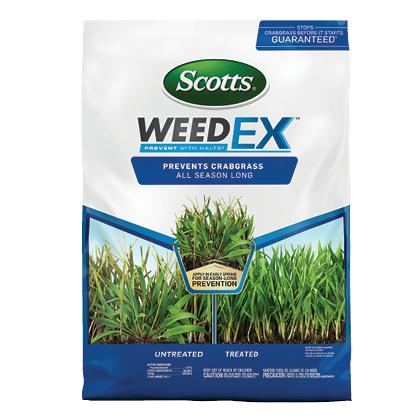
Crabgrass Prevention
Some weeds are stubborn and return year after year. Strategic timing—especially a fall application—targets weeds before they establish, reducing seed production and making next season’s lawn care easier and more effective.
WeedEx provides additional crabgrass prevention for lawns that struggle with recurring weed pressure. It contains the same active ingredient found in Scotts Step One, making it an effective option for homeowners dealing with persistent crabgrass issues.
When to Apply
- First week of June for extended crabgrass control
- Last week of November for fall weed prevention
- A fall application is especially valuable. Applying WeedEx in November has been proven to reduce the return of persistent weeds—such as henbit, chickweed, clover, and oxalis—the following spring.

Greening up, adding more nutrition
Milorganite is a trusted, organic fertilizer known for delivering steady, reliable green-up without stressing your lawn. Its iron content enhances deep green color, while its low amount of slow-release nitrogen makes it one of the few fertilizers that can be safely applied during late July and August, when other products may cause burn.
How and When to Use
- Can be applied every three weeks after any of the four lawn care steps
- Ideal for improving lawn thickness and color throughout summer
- Safe to use during heat stress periods when used as directed
Versatile, All-Purpose Use
- Safe for lawns, flowers, vegetables, shrubs, and trees
- Can be used in vegetable and flower beds
- Acts as an effective carrier when spreading grass seed
- Pet- and child-friendly when applied as directed
Each bag provides essential nutrients, including nitrogen and phosphorus, along with key micronutrients that support healthy plant development and root growth.

Soil Conditioner for heavy, compacted clay soils
Clay soils restrict water, air, and root growth. Fast Acting Gypsum improves soil structure from the inside out, helping roots grow deeper, reducing runoff, and allowing nutrients to move more efficiently—leading to healthier, more resilient lawns year after year.
When applied consistently, it works deep within the soil to improve structure, drainage, and root penetration—without changing soil pH.
How and When to Use
- Apply twice per year alongside lime applications in spring and fall
- Designed for long-term improvement, not quick fixes
Gypsum works gradually. It takes a minimum of three years of consistent applications for the product to move through the soil profile and reach clay layers. Once established, it creates a permanent chemical decompaction, improving aeration and water movement over time.

Lawn Moss Control
Moss killers are an effective solution for lawns where shade, moisture, or compacted soil allow moss to take over. Moss control products, like Jonathan Green’s Lawn Moss Control Granules, can be applied any time of year, as long as you are not seeding at the same time.
What to Expect After Application
- Treated moss will turn black within a few days
- Most moss species in the Northeast reproduce by spores
- Dead moss should be raked out and removed after treatment
- If moss is not removed, it can respawn and spread again
Seeding Guidelines
- When using Jonathan Green Lawn Moss Control Granules, delay seeding for two weeks after application
Product Highlights
- Kills moss quickly for visible results
- Easy-to-spread granules for even coverage
- Contains 50% more active ingredient per 5,000 sq. ft. bag than many competing brands
- Can be used any time moss is a problem
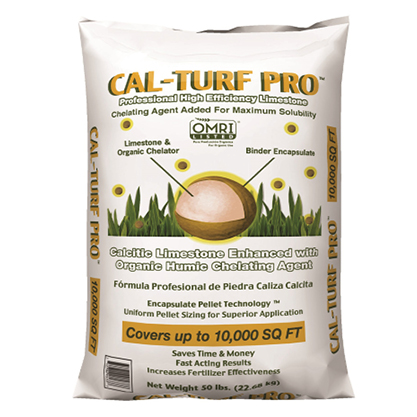
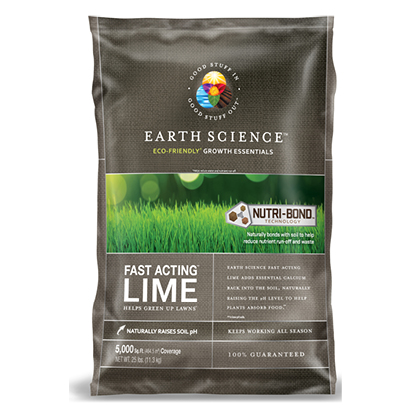
LIMING to maximize fertilizer effectiveness
Liming plays a critical role in maintaining healthy soil and maximizing fertilizer effectiveness. Think of your lawn’s roots like a straw in a glass. Over time, mineral buildup and fertilizer residue act like crushed ice, clogging the straw and limiting nutrient uptake. Applying lime is like melting that ice—clearing the pathway so roots can absorb water and nutrients efficiently again.
Why Lime Is Important
- The optimal soil pH for lawns is 6.5–7.0
- Lime raises soil pH and helps “sweeten” acidic soil
- Proper pH allows grass to absorb nutrients more efficiently
How and When to Use
- In our New Jersey area, apply lime in spring and fall as part of your seasonal lawn care routine, typically March and November
- Soil testing is recommended periodically to monitor pH levels and adjust as needed
We carry several lime options, and like Earth Science Fast Acting Lime for lawns. This formulation:
- Begins working in about four weeks, compared to 12 weeks for traditional lime
- Is available in 5,000 and 10,000 sq. ft. bags, making it more practical for most lawns
- Provides faster results and easier application than standard pulverized or pelletized lime
LIMING to maximize fertilizer effectiveness
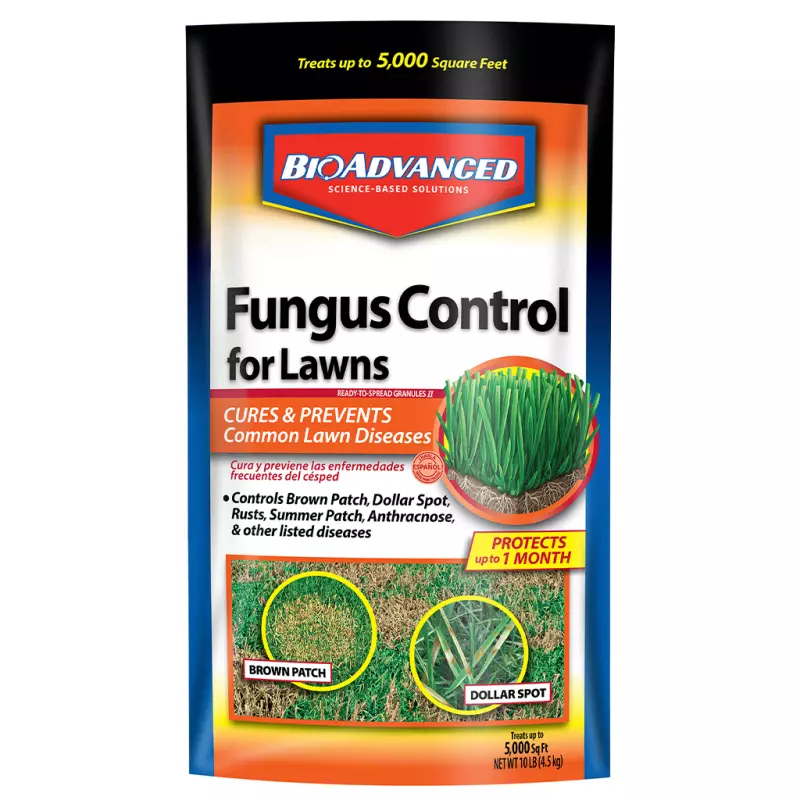
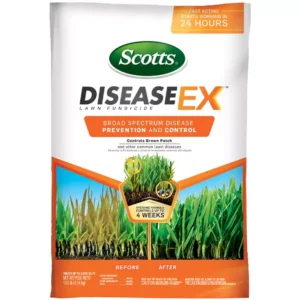
Lawn fungus thrives in warm, humid conditions and can spread quickly if left untreated. Preventative treatments protect your lawn during humid months, while early detection makes curative treatments more effective and limits long-term damage.
Fungus control products are most effective when used preventatively during peak risk periods.
When to Apply
- First week of June, July, and August for preventative control
- Some lawns may experience fungus as early as late April or May, depending on weather and soil conditions
How to Use
- When applied preventatively, products help control or eliminate common lawn fungi before damage appears
- If fungus is already present, apply at double the rate for curative treatment, following label directions carefully
- Monitor your lawn regularly for discoloration, thinning, or patchy areas